
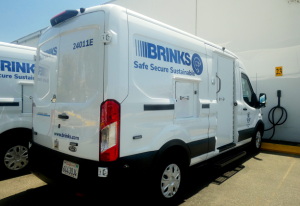
From self-delivery to expert-led scale
After a self-delivered 6-vehicle pilot, Brinks partnered with Zenobē to scale to 25 vehicles in 12 months, cutting costs and timelines whilst projecting $800k in fuel and maintenance savings.

594 tonnes
of CO2 saved from entering the atmosphere each year
225kg
of NOX saved from entering the atmosphere each year
9
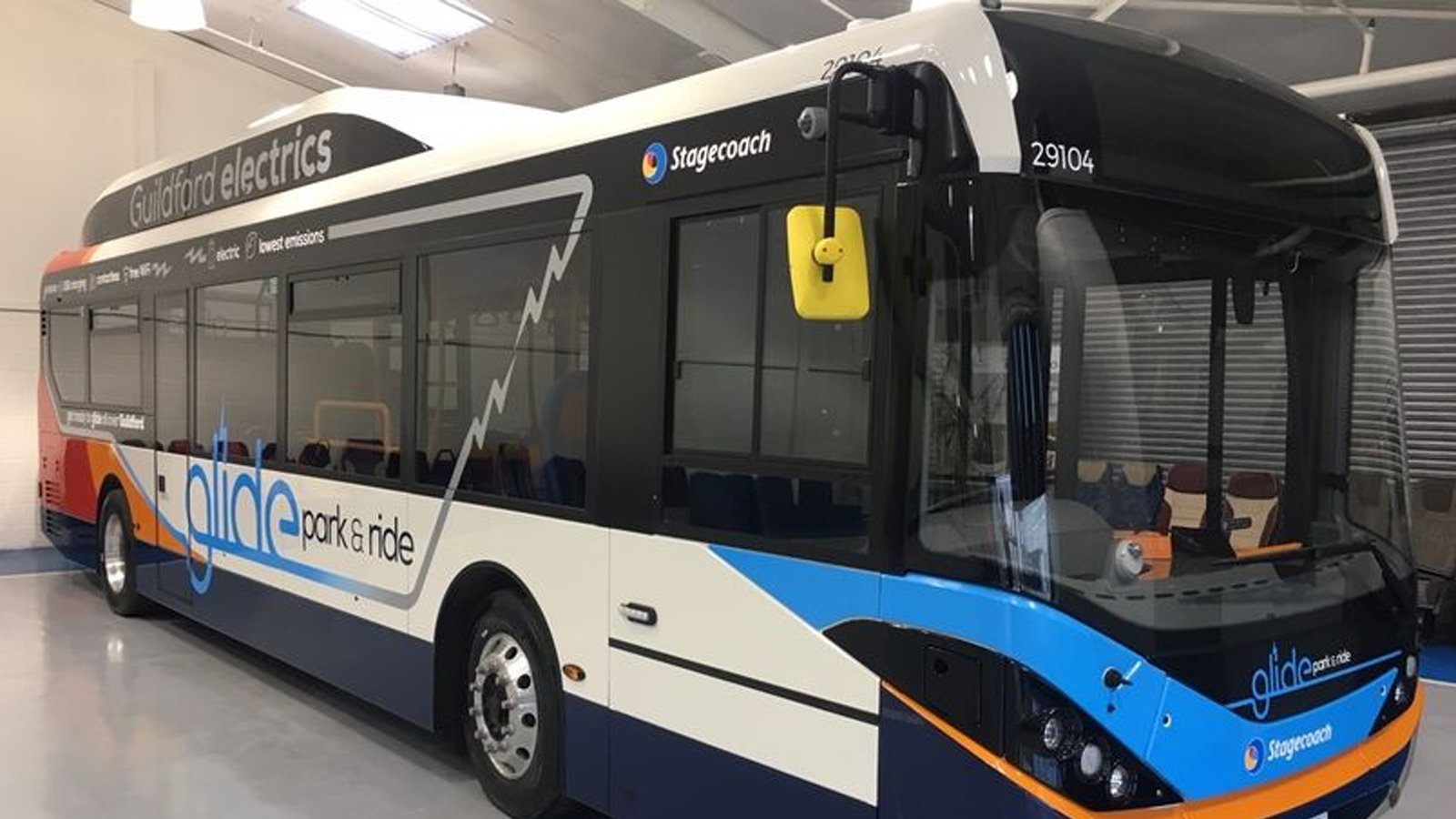
Enviro200EV electric buses
Zenobē provided the battery charging infrastructure for nine electric buses for bus operator Stagecoach in Guildford, UK.

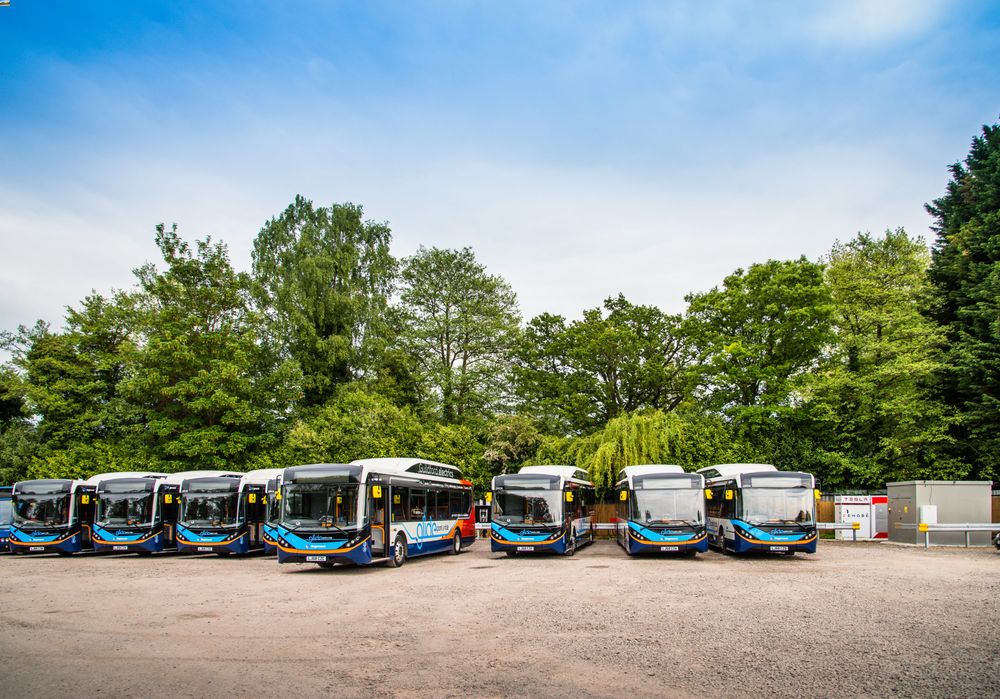
Bus operator Stagecoach, in partnership with Surrey County Council, unveiled plans for their first fleet of all electric buses as part of the company’s ongoing efforts to improve air quality for the city of Guildford.
However, the existing grid connection at Stagecoach’s Guildford depot faced capacity issues that threatened the viability of the planned fleet electrification project. A traditional grid upgrade needed to charge this new electric fleet would take over 12 months to complete and cost an estimated £2-3 million.
Stagecoach also indicated it was likely to move its operating centre in the near future, further reducing the attractiveness of a long and expensive traditional grid upgrade.
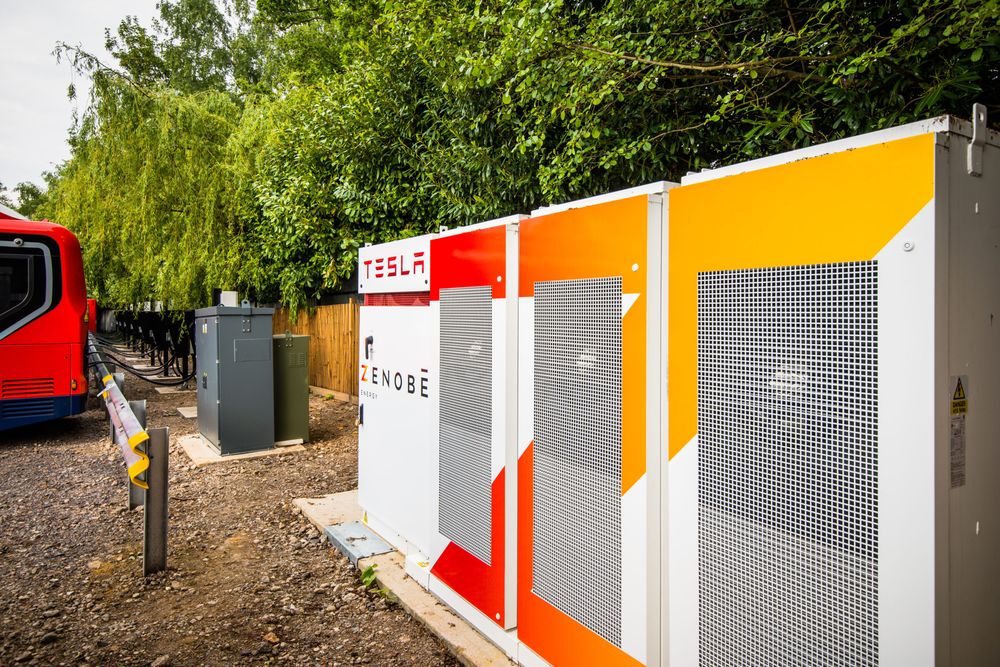
In a first of its kind solution, Zenobē supplied a stationary battery on site which incorporated charging infrastructure and installed a custom management software system in January 2019. Our charging infrastructure and software system was installed in six weeks with minimal disruption to operations. Additionally, our solution was designed to be highly mobile should Stagecoach seek to relocate its operations.
The total cost of Zenobē’s solution was substantially less expensive than a traditional grid upgrade, saving Stagecoach around 80% of the predicted costs. Furthermore, the project’s cost is paid over the seven year life of the contract, thereby eliminating high upfront capital costs.
Stagecoach also benefited from a share of the additional income generated by Zenobē from utilising the battery to provide services to National Grid whilst not charging the buses.
Telematics – Zenobē conducted a detailed study of mileages and energy efficiency for each vehicle-route combination to determine grid and storage requirements.
Charging infrastructure – we utilised AC chargers (installs can also be done with DC or mixed DC/AC chargers) in a simple plug-and-play solution that is technology neutral. The bus operator plugs in their electric vehicle and we take care of smart charging to guarantee a full charge every day.
Batteries – modular and move-able, quick to install, and connected to Zenobē’s proprietary dispatch and monitoring software.
After a self-delivered 6-vehicle pilot, Brinks partnered with Zenobē to scale to 25 vehicles in 12 months, cutting costs and timelines whilst projecting $800k in fuel and maintenance savings.
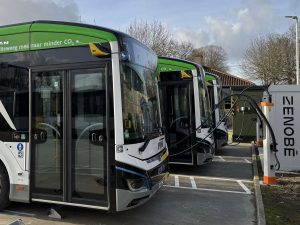
Discover how Zenobē is supporting Belgian bus operators with electrification with nearly 70 electric buses across multiple depots.

Zenobē partnered with Educational Bus Transportation (EBT), a managed entity of The Trans Group, to finance 10 electric school buses and deliver the associated charging infrastructure for Copiague Public Schools. The project supports New York State’s school bus electrification goals while providing zero-emission transport for approximately 4,500 students and creating a scalable foundation for future fleet expansion.
Thanks for getting in touch – we’ll respond as soon as possible. You can also reach us on contact@zenobe.com

Pete leads Zenobē’s growing team of Product specialists across all areas of the business. His team oversee our R&D as well as product development in both hardware and software.
He has been working in the European E-Mobility sector from over ten years, specialising in the design, build and delivery of software systems for EV Charging.