
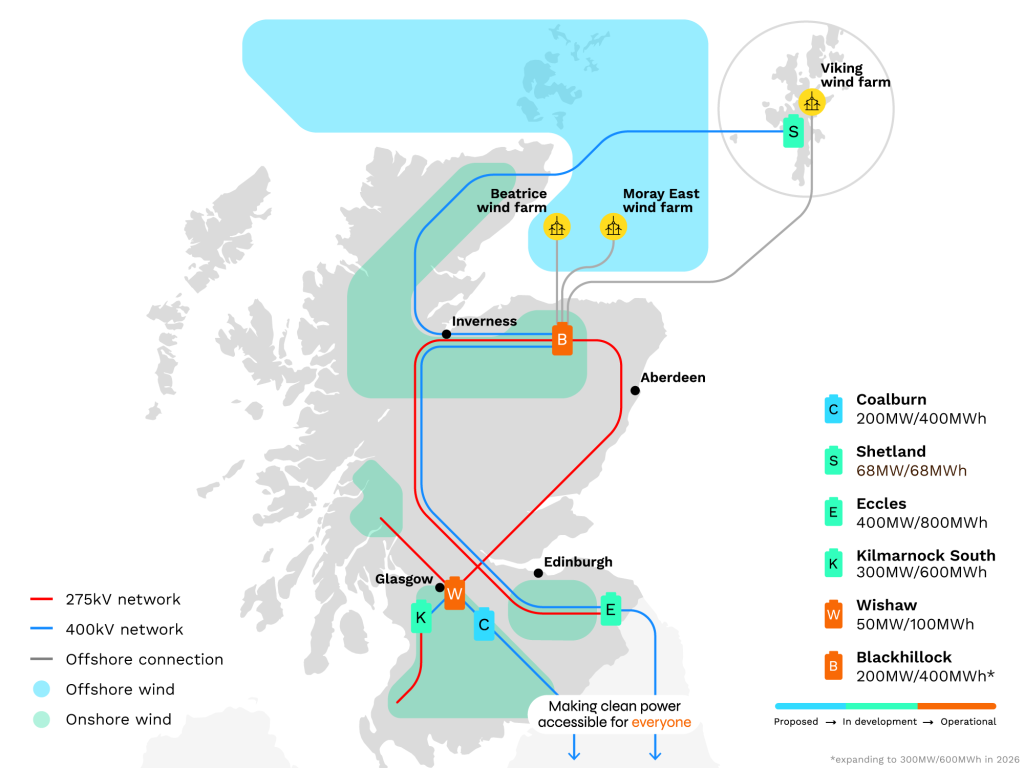
Zenobē is delivering a 68MW battery storage system in Lerwick, Shetland, providing a long-term standby solution that will be crucial for securing the island’s energy supply, reducing emissions, and enabling greater use of renewables
Zenobē designs, finances, builds, owns and operates battery energy storage systems (BESS). We help grid operators overcome the challenges in balancing supply and demand and overcoming power stability and constraints as we transition away from fossil fuels towards net zero.
By 2027, Zenobē is on track to deliver 1.2GW of battery power, which will make us one of the largest owners and operators of battery storage in the UK.
Battery Energy Storage Systems (BESS) are critical infrastructure to ensure that renewable power, like wind and solar, does not go to waste. Batteries can be deployed in many ways to optimise and stabilise electricity systems. They can store surplus power during periods when generation exceeds demand and export it back into the system when consumers need power most.
Connected to the National Grid or local distribution systems, these batteries act to stabilise constraints on the grid to ensure security of supply and lower energy costs. It is this stabilisation and security of supply that are the key objectives of the Shetland Standby Project.
Zenobē’s battery energy storage system will provide a long-term standby solution for Shetland, playing a crucial role in securing the island’s energy supply and supporting its transition to a low-carbon future.
In the event of an issue with the HVDC link connecting Shetland to the mainland grid, the system will deliver a ‘fault-ride through’ service, maintaining power to the island until Lerwick Power Station can be brought out of standby.
With the Viking Wind Farm expected to be one of the most productive onshore wind farms in the world, the Shetland Standby Project will ensure that this clean, abundant wind power is harnessed and used locally.
The project will also feature advanced technologies, including grid-forming inverters and AC choppers, to stabilise the grid and absorb excess renewable energy – enhancing resilience and enabling greater use of renewables across the islands.
Construction Traffic
Construction traffic has been closely managed to ensure minimum impact to local residents.
Operational Traffic
There will be little requirement for HGV movements to and from the site once it is operational. Traffic during operation will be limited to monthly visits using a small van or 4×4 vehicle.
June 2026
The project reached a key milestone at the end of Q2 2026, with all main construction works now complete – with the final structural foundations and cable troughs being completed recently.
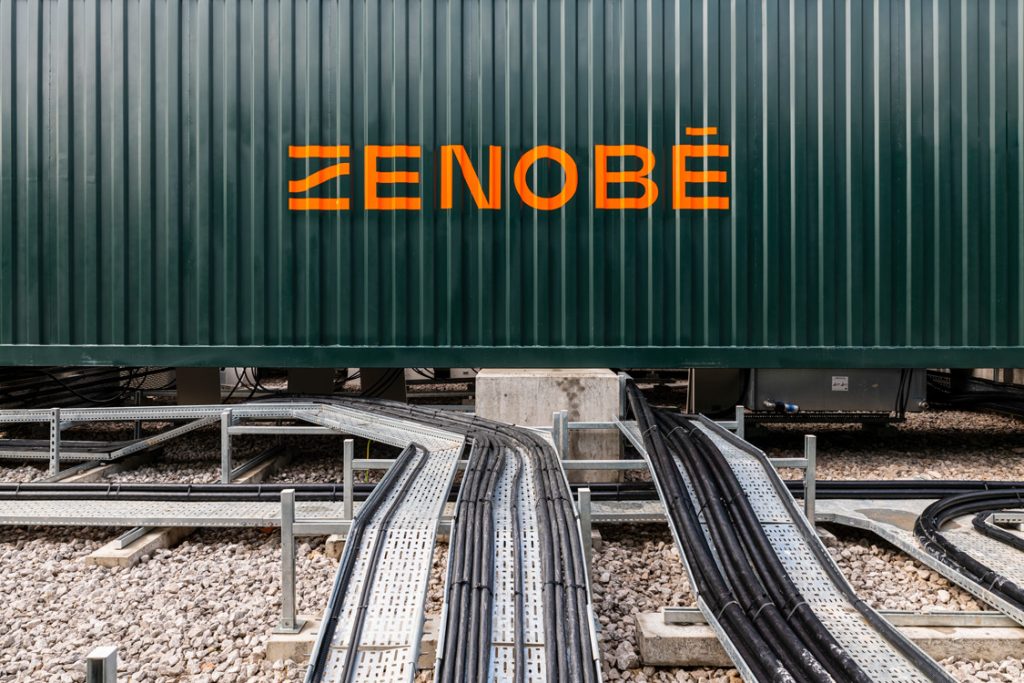
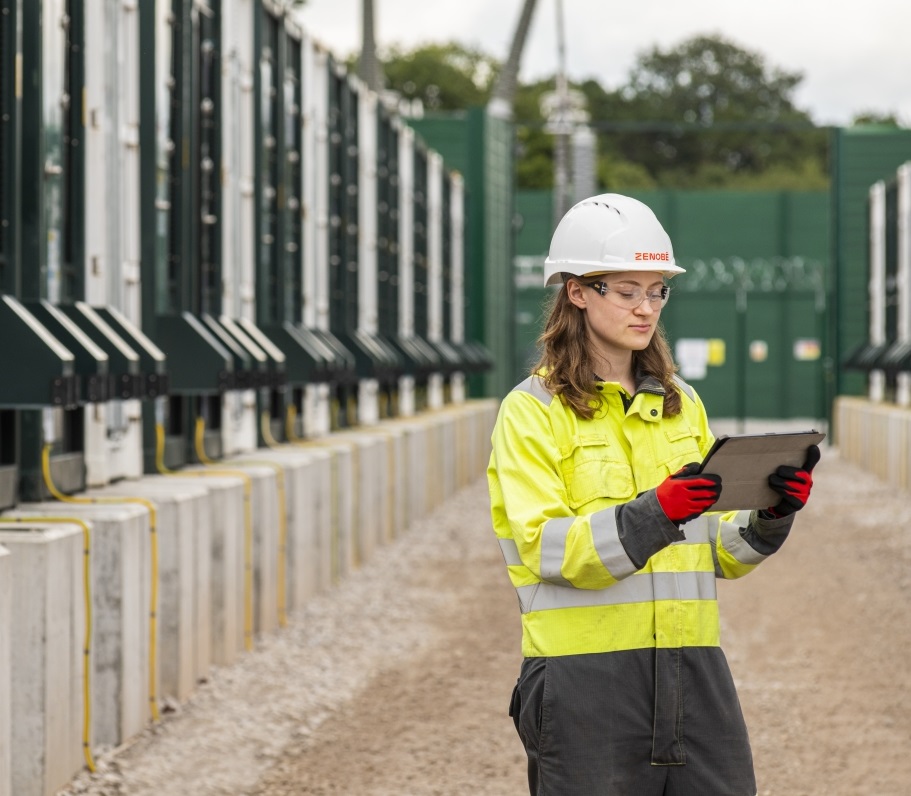
Alongside this, the majority of above‑ground equipment – including all battery energy storage system units and AC chopper equipment – has been delivered and successfully installed on site. With this infrastructure now in place, electrical installation works are underway to connect the system through power and communications cabling, enabling future operation.
The site has also been secured with the installation of permanent perimeter fencing.
Looking ahead, work will focus on completing the remaining equipment deliveries and electrical installation, followed by the start of cold commissioning in advance of connection and energisation to the distribution network.
The project has a dedicated annual community benefit fund, delivered in partnership with Foundation Scotland to ensure funding is shaped by local priorities and delivers meaningful outcomes for Shetland communities.
In 2026, funding supported the Climate Action Ting, delivered by the Highlands & Islands Climate Hub. This community-led initiative brought together local residents to review and vote on a range of climate-focused projects, with funding awarded directly to initiatives chosen by the community.
The event supported a number of local projects focused on climate action and sustainability, while also creating an open and engaging space for conversation, collaboration and local decision-making.
Zenobē designs, builds and operates battery energy storage systems (BESS) that maximise the uptake of renewable power, ensuring it does not go to waste and can power our homes and our transport.
Founded in the UK in 2017, we will deliver 1.2GW worth of battery storage projects by 2026.
We’re investing £750m into the Scottish electricity transmission network over the next three years, to 2026. These sites will save more than 1 billion tonnes of CO2, over their 15 years of operation.
The Scottish and UK Governments have made a legal commitment to cut carbon emissions to net-zero. With the move away from fossil fuels, the demand for electricity will increase with the need to electrify transport, heating and more.
Battery storage plays a key role in helping the UK meet its net zero ambitions as it allows a greater amount of cheap renewable energy to be deployed whilst providing critical balancing and stability services without the need for traditional fossil power stations.
If you have any questions about the Shetland Standby Project please contact our project management team via email: ukprojects@zenobe.com
If you cannot find the document you are looking for, get in touch with our project development team by emailing ukprojects@zenobe.com

Pete leads Zenobē’s growing team of Product specialists across all areas of the business. His team oversee our R&D as well as product development in both hardware and software.
He has been working in the European E-Mobility sector from over ten years, specialising in the design, build and delivery of software systems for EV Charging.