
Zenobē is developing the Harker Battery Energy Storage System (BESS) near Carlisle, bringing new grid‑scale storage capacity to strengthen the electricity network in the area.
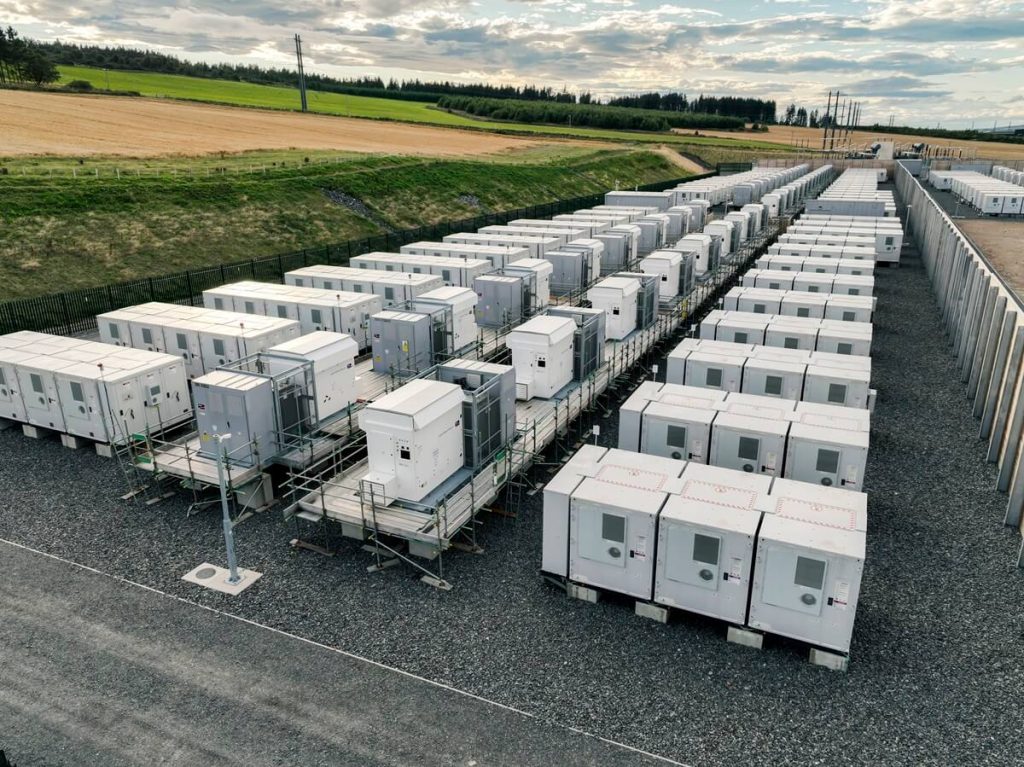
Harker BESS is a 400MW battery storage project located just north of Carlisle, forming a key part of Zenobē’s growing portfolio of grid‑scale storage assets across the UK. Situated alongside National Grid’s 400kV substation at Harker, the site will support an important transmission corridor by storing excess renewable power, reducing curtailment and strengthening system resilience.
The project was originally taken through the planning process by Innova, under the name Blackdyke BESS, before being acquired by Zenobē. With planning consents secured, the project is now progressing through the detailed design and pre‑delivery stages ahead of full build‑out.
By 2027, Zenobē is on track to deliver 1.6GW of battery power, which will make us one of the largest owners and operators of battery storage in the UK.
battery to reduce wasted
wind energy
target start
of construction
direct connection to
the transmission network
The site covers approximately 32 acres (just over 13 hectares) of agricultural land approximately four miles north of Carlisle. The land lies at Ordnance Survey grid reference 338100, 561800 (NY38086181).

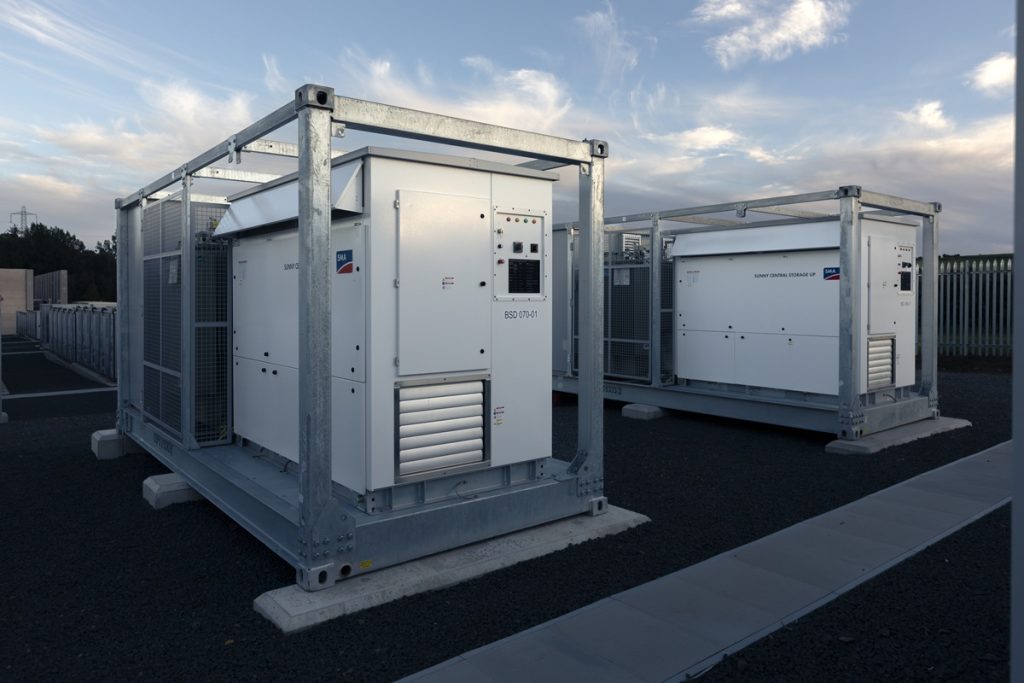
The development comprises the construction and operation of a battery storage scheme, with a total capacity of up to 400MW. The principal components of the development include:
Low voltage switch rooms and auxiliary transformers
Internal access tracks approximately 5m in width
Underground cables to connect to the substation
A perimeter metal palisade fence
Landscaping bund, planting and biodiversity enhancement measures
The programme below outlines the key stages of the project, from planning and construction through to the site becoming fully operational.
Planning permission for Harker BESS was granted in October 2023. The project was initially developed by Innova under the name Blackdyke BESS, including early-stage community consultation and engagement, before being acquired by Zenobē in 2025 to take forward the next stages of design and delivery.
With planning consent in place, the project moves through detailed design, procurement activities, contract negotiations, and the discharge of relevant planning conditions. During this stage, technical, financial and legal due diligence is undertaken to support the Final Investment Decision.
This phase typically takes around one year, depending on the final design and grid programme.
Initial enabling works, commencing in August 2026, will include the construction of a new bellmouth to establish the site entrance.
These activities will prepare the site ahead of the main construction phase.
Main construction is expected to begin with site mobilisation in Q1 2027. This will be followed by site preparation and earthworks to create a level platform for the installation of battery units and associated electrical infrastructure. Once the platform and cable ducting are in place, batteries, transformers and other electrical equipment are expected to be delivered from Q4 2027 onwards, before being installed and connected.
For a project of this scale, the primary construction phase typically takes around 18 months. Throughout this period, Zenobē will maintain ongoing engagement with local communities and stakeholders, providing updates on construction activities, managing potential impacts, and ensuring that any concerns are responded to promptly. We are committed to transparent communication and working collaboratively with the community throughout delivery.
Following installation, the battery units and all supporting electrical equipment will undergo a comprehensive commissioning programme. This will include several months of testing, with energisation expected in 2028, to ensure the system meets all operational and safety requirements before entering service on the transmission network.
Commercial operation is expected to commence in late 2028 or early 2029, following commissioning. Once in service, the Harker BESS will play an important role in supporting the electricity network by providing flexibility and balancing services.
Day‑to‑day operational requirements will be minimal, with the site typically operated remotely. This means there will be very few vehicle movements associated with the facility once construction is complete.
Zenobē will continue to engage with local communities and stakeholders during operation, maintaining open lines of communication and ensuring the site is managed responsibly over its lifetime.
At the end of its approximately 40‑year operational life, all equipment and structures will be removed. Wherever possible, materials will be reused or recycled, and the land will be restored.
Zenobē designs, builds and operates battery energy storage systems (BESS) that maximise the uptake of renewable power, ensuring it does not go to waste and can power our homes and our transport.
Founded in the UK in 2017, we will deliver 1.6GW worth of battery storage projects by 2027.
The UK Government has made a legal commitment to cut carbon emissions to net‑zero, alongside its ambition for Clean Power 2030, with a low‑carbon electricity system playing a central role in decarbonising the economy. As the UK moves away from fossil fuels, demand for electricity will increase significantly through the electrification of transport, heating and industry.
Battery energy storage systems (BESS) play a critical role in enabling this transition by allowing greater deployment of low‑cost renewable energy, reducing curtailment, and providing essential balancing, flexibility and stability services to the electricity system – supporting a secure move away from traditional fossil fuel generation.
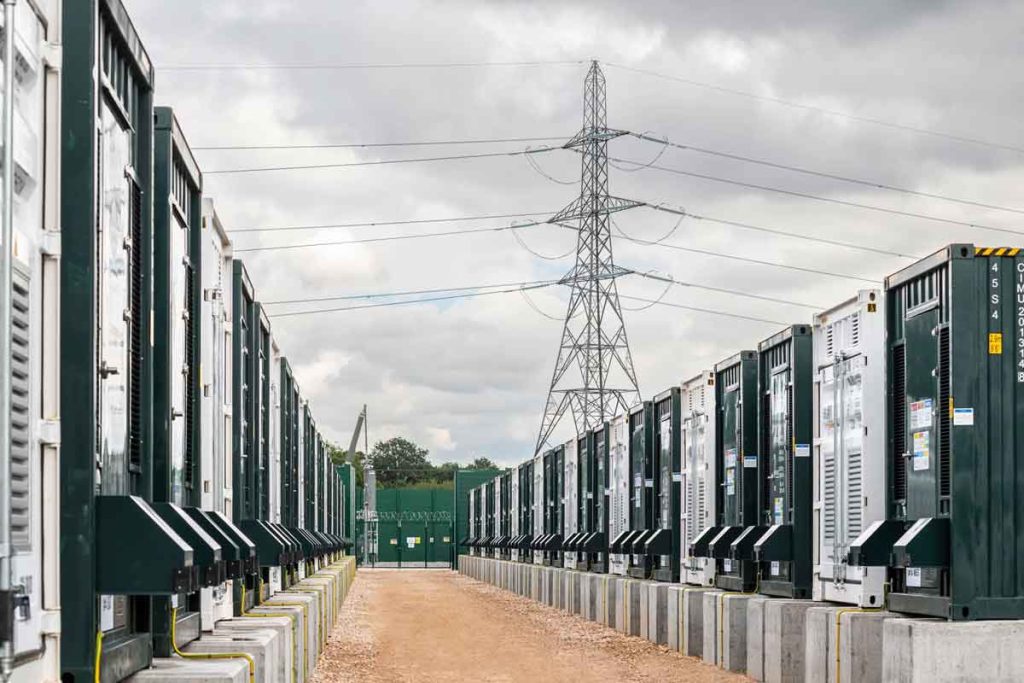
Harker is a strategically important location within the UK’s electricity transmission network. The National Grid 400kV substation at Harker sits on a key north–south corridor that carries large volumes of renewable electricity from Scotland into England, an area that can experience significant power flows and system constraints. A grid‑scale battery at this point on the network will help store excess renewable energy, reduce curtailment and provide essential flexibility services to support a stable, efficient electricity system.
Without large‑scale storage schemes like this one, renewable generation in the region will increasingly face curtailment as more projects connect to the network, and conventional gas‑fired stations may be called upon more frequently to maintain system stability. By absorbing surplus renewable electricity and releasing it when needed, the Harker BESS will play a vital role in enabling a cleaner, more resilient energy future.

A Community Benefit Fund will be established for Harker BESS, providing annual funding to Rockcliffe Parish Council and Westlinton Parish Council. This will support locally driven initiatives and ensure the project delivers long‑term value for the communities closest to the site.
Zenobē will also provide annual contributions to two charitable organisations operating locally, helping to support activity that benefits residents in the surrounding area.
Together, these contributions ensure the benefits of the project are shared locally and continue throughout the lifetime of the scheme.
Renewable energy is intermittent which means at any time there is a risk of it generating too much or too little in relation to demand from homes, businesses and transport.
Batteries provide ‘flexibility’ and the ability to balance the fluctuating supply and demand on the electricity system which comes with increased deployment of renewable and decentralised energy generation. For example, if wind turbines are generating more power than demand allows, batteries store this surplus energy. When wind generation is low but demand is high, battery operators release the stored electricity back into the system, ensuring this energy is not wasted.
Batteries also provide a wide range of additional services needed to maintain grid stability and keep the lights on. Our batteries have been the first in the world to provide fast reserve, to be used for reactive power and to manage grid constraints on the transmission network.
Our bespoke solutions range from ancillary, balancing and wholesale trading, to providing inertia, short circuit level, and voltage management.
Zenobē also provides non-wire alternative solutions that reduce or eliminate expensive network reinforcement costs. These are specific solutions that are essential to a decarbonised electricity system.
If you have any questions about our battery energy storage system in development contact our project management team.
If you cannot find the document you are looking for, get in touch with our project development team by emailing ukprojects@zenobe.com

Pete leads Zenobē’s growing team of Product specialists across all areas of the business. His team oversee our R&D as well as product development in both hardware and software.
He has been working in the European E-Mobility sector from over ten years, specialising in the design, build and delivery of software systems for EV Charging.