
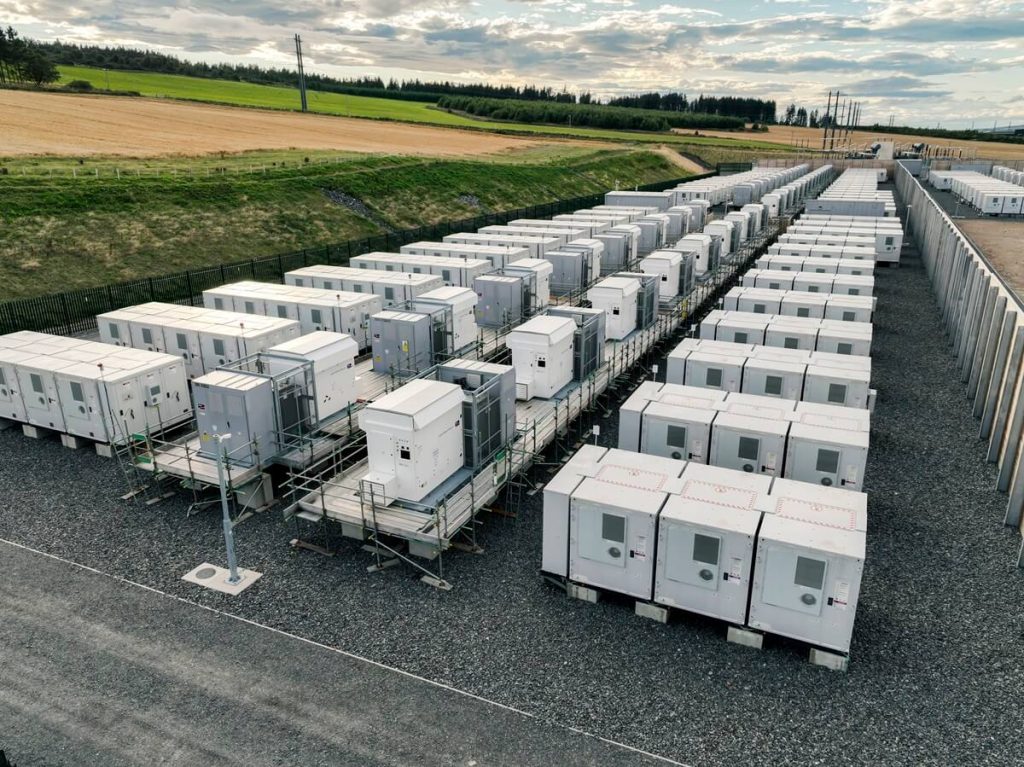
Blackhillock BESS is a 300MW/700MWh battery storage project that forms a key part of Zenobē’s portfolio in Scotland. Located between Inverness and Aberdeen, the site supports one of the busiest sections of the transmission network by storing excess renewable power and helping manage constraint pressures. Phase 1 entered operation in early 2025, with Phase 2 now underway to complete the full build‑out.
By 2027, Zenobē is on track to deliver 1.2GW of battery power, which will make us one of the largest owners and operators of battery storage in the UK.
supporting
Scotland’s renewable
energy system
tonnes of CO2
prevented over first
15 years of operation
equivalent number of homes
powered for one hour
from daily discharge
The Blackhillock Battery Energy Storage System (BESS) is a 300MW/700MWh project located between Inverness and Aberdeen, purpose‑built to help unlock Scotland’s growing renewable power. Strategically positioned to relieve congestion from major offshore wind farms – Viking, Moray East and Beatrice – the site stores excess wind energy that would otherwise be curtailed and releases it when the network needs it most. This ensures more clean power reaches homes and businesses while strengthening the resilience of the transmission system.
Blackhillock is one of the most technically advanced battery sites in Europe and the first transmission‑connected battery in the world to deliver full Stability Services to the National Energy System Operator (NESO). Using grid‑forming inverters and advanced optimisation software, the project supports system voltage, inertia and frequency stability – services traditionally delivered by fossil‑fuel plants. By enabling these services with clean technology, the site helps decarbonise the grid while maintaining reliability.
Over its first 15 years, the project is expected to reduce CO₂ emissions by approximately 2.6 million tonnes, significantly cut curtailment costs for consumers, and play a key role in achieving the UK’s 2030 clean power ambitions. Phase 1 entered commercial operation in early 2025 with an initial 200MW of capacity. Phase 2 is now underway and will increase the site to its full 300MW/700MWh.
Contractors will begin mobilising to site, establishing compounds and preparing for the next phase of works.
Initial civil activities will begin on site, including ground preparation, access routes and early enabling works to support the installation programme.
Core civil works will take place across this period, including foundation preparation, drainage, trenching and other site infrastructure required ahead of equipment delivery.
Major battery components and associated electrical equipment will arrive on site and be moved into position for installation.
With equipment installed, the project team will begin early commissioning activities, connecting systems, performing safety checks, and preparing for energisation.
Final commissioning works will be completed during planned grid outages. This phase includes system testing, performance verification and final energisation activities before the site transitions to full operation.
Once commissioning is complete and the site is fully energised, Blackhillock BESS will move into its operational phase.
Zenobē designs, builds and operates battery energy storage systems (BESS) that maximise the uptake of renewable power, ensuring it does not go to waste and can power our homes and our transport.
Founded in the UK in 2017, we will deliver 1.2GW worth of battery storage projects by 2027.
We’re investing £750m into the Scottish electricity transmission network over the next three years, to 2026. These sites will save more than 1 billion tonnes of CO2, over their 15 years of operation.
The Scottish and UK Governments have made a legal commitment to cut carbon emissions to net-zero. With the move away from fossil fuels, the demand for electricity will increase with the need to electrify transport, heating and more.
Battery storage plays a key role in helping the UK meet its net zero ambitions as it allows a greater amount of cheap renewable energy to be deployed whilst providing critical balancing and stability services without the need for traditional fossil power stations.
Blackhillock sits on one of the busiest sections of Scotland’s transmission network, where power from major offshore wind farms flows south toward areas of high demand. This part of the network regularly experiences constraint pressures, meaning large volumes of clean energy cannot always be transported when generation is high.
The Electricity System Operator identified the area as a priority location for new solutions that can relieve congestion, support system stability, and ensure more renewable power can move through the network efficiently.
By siting a BESS at Blackhillock, more of Scotland’s wind generation can reach homes and businesses across the UK, reducing wasted clean energy and minimising the need to call on fossil‑fuelled plants during periods of network stress.


A dedicated Community Benefit Fund has been established for Blackhillock BESS, shared between Keith Community Council and Strathisla Community Council. The fund is designed to ensure the long‑term value of the project is shared locally and shaped directly by the communities closest to the site.
It offers grants to support a wide range of local activities – from equipment and running costs to improvements of community facilities or early‑stage support for larger projects, helping strengthen local connections and improve community wellbeing.
Renewable energy is intermittent, which means that at any time there is a risk of generating too much or too little in relation to demand from homes, businesses and even transport.
Batteries provide what energy insiders call ‘flexibility’ – they offer us the ability to adjust supply and demand to balance the system. For example, if wind turbines are generating more power than needed, batteries store this surplus energy. When wind generation is low but demand is high, battery operators release the stored electricity back into the system, ensuring this energy is not wasted.
They also provide a wide range of additional services needed to maintain grid stability and keep the lights on.
If you cannot find the document you are looking for, get in touch with our project development team by emailing ukprojects@zenobe.com

Pete leads Zenobē’s growing team of Product specialists across all areas of the business. His team oversee our R&D as well as product development in both hardware and software.
He has been working in the European E-Mobility sector from over ten years, specialising in the design, build and delivery of software systems for EV Charging.