
By Julia Meek, Director of Bus – UK | 3-minute read
Depot electrification is the first major infrastructure step in delivering zero-emission bus services. For authorities moving into franchising or enhanced partnerships, it brings new delivery risks as well as the opportunity to modernise services.
Unlike fleet procurement, it brings together planning, highways, estates, energy networks, finance and legal processes – many of which sit outside traditional transport functions.
Across the sector, early projects have shown how easily infrastructure risks can surface late in delivery – affecting cost, timelines and operations.
In electrifying 122 depots across the world, including 73 in the UK, we’ve seen that successful schemes tend to share common characteristics:
Our role is to work alongside bus operators and transport authorities to manage the infrastructure delivery process, from power and design considerations through to implementation, so that operational teams can focus on service planning and passenger outcomes.
Electrification challenges tend to follow a predictable sequence:
Before a grid connection application or power procurement can begin, authorities need confidence in the scale and profile of a depot’s power demand. This is less straightforward than multiplying bus battery sizes by fleet numbers, as operational patterns drive infrastructure requirements. Authorities firstly need to determine:
While some authorities commission this analysis separately, we use the expertise of our in-house Commercial Analytics team to incorporate it directly into our depot electrification delivery model. They analyse fleet data and test multiple configurations to establish the required connection capacity and charging strategy before infrastructure decisions are fixed.
This allows depot design to reflect long-term service plans whilst avoiding over-investment, under-capacity or future constraints that could limit fleet growth.
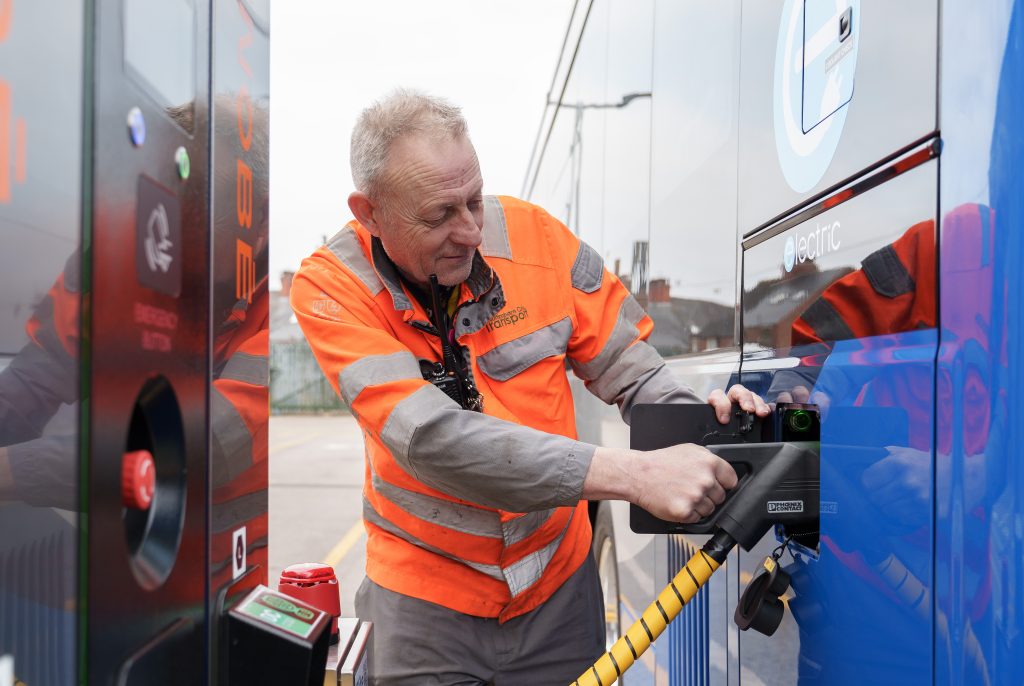
Once power requirements are understood, the next step is securing the connection itself. This introduces new stakeholders for many authorities, particularly Distribution Network Operators (DNOs) and Independent Distribution Network Operators (iDNOs), alongside connection queues that can extend over several years.
At this stage, risk often arises from:
Zenobē manages this process as part of the infrastructure delivery role, coordinating directly with DNOs and iDNOs and aligning connection strategy with implementation plans.
Where appropriate, we facilitate iDNO asset adoption to reduce upfront capital requirements, allowing funding to remain focused on vehicles and passenger service improvements.
This approach enables electrification to progress in line with franchising and funding milestones, even in constrained network areas, while maintaining confidence in long-term programme delivery.
Once power availability is confirmed, the challenge becomes integrating electrical infrastructure into an operational depot without disrupting services.
Most existing depots were not designed for electrification. Constrained layouts, shared access routes, heritage considerations and ageing utilities are common, and construction must usually take place while services continue to operate. Zenobē delivers the design and construction of depot infrastructure as a single coordinated programme.
Our engineering teams start with a whole‑site assessment: vehicle movements, current operating practices and planned fleet expansion. This avoids “regret cost” – expensive rework that happens when layouts, cable routes or charging strategies haven’t been considered early enough.
Example: At National Express’s Yardley Wood depot in Birmingham, grid constraints and a compact site ruled out conventional infrastructure upgrades. Zenobē installed a 667kWh battery storage system occupying just two parking spaces, charging from the grid during off-peak periods and discharging overnight to ensure a fully charged fleet each morning. The design was future-proofed to support fleet expansion and has since provided the blueprint for National Express’s wider electrification programme.
The final piece is making sure all of this can be built smoothly. During construction Zenobē coordinates contractors, installers and network works so that depots remain operational, sequencing works around service requirements and commissioning infrastructure in stages.
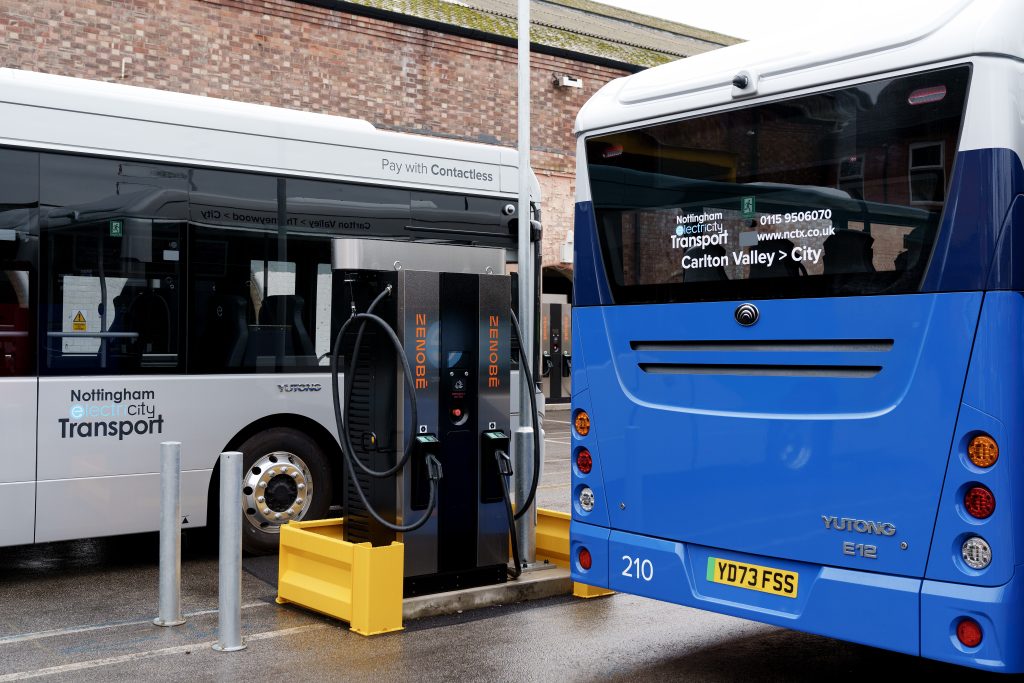
In 2022, after securing £15.2m of ZEBRA funding, Nottingham City Transport began electrifying its historic Trent Bridge depot – a constrained site that had to remain operational throughout delivery.
The challenge
The heritage listed south building prevented visible external cabling and restricted structural alterations, while operational changes ruled out reverse parking options and reduced available layout space. In the north garage, a weak roof required bespoke structural solutions rather than standard installations.
On the power side, the depot needed two 1,800 kVA connections delivered via a 1.8 km engineered route crossing both a canal and a railway bridge – each adding technical and planning complexity.
The approach
Working closely with NCT and planning specialists, the design balanced heritage constraints with practicality. Space was created by reopening disused arches for charger installation and adopting a mixed charging layout suited to the site.
Zenobē peak power analysis aligned the charging strategy with available grid capacity and competitively procured connection works with an iDNO to reduce costs. Construction was phased to keep the depot fully operational, supported by close collaboration with NCT’s operational teams.
The outcome
Phase 1 was delivered on time and on budget, providing two 1,800 kVA connections over a 1.8 km route, enabling 30 electric buses and creating capacity for future expansion.
Even highly constrained, historic depots can be electrified successfully with the right blend of engineering, operations and commercial strategy.
Once power availability is confirmed, the challenge becomes integrating electrical infrastructure into an operational depot without disrupting services.
Most existing depots were not designed for electrification. Constrained layouts, shared access routes, heritage considerations and ageing utilities are common, and construction must usually take place while services continue to operate. Zenobē delivers the design and construction of depot infrastructure as a single coordinated programme.
Our engineering teams start with a whole‑site assessment: vehicle movements, current operating practices and planned fleet expansion. This avoids “regret cost” – expensive rework that happens when layouts, cable routes or charging strategies haven’t been considered early enough.
Example: At National Express’s Yardley Wood depot in Birmingham, grid constraints and a compact site ruled out conventional infrastructure upgrades. Zenobē installed a 667kWh battery storage system occupying just two parking spaces, charging from the grid during off-peak periods and discharging overnight to ensure a fully charged fleet each morning. The design was future-proofed to support fleet expansion and has since provided the blueprint for National Express’s wider electrification programme.
The final piece is making sure all of this can be built smoothly. During construction Zenobē coordinates contractors, installers and network works so that depots remain operational, sequencing works around service requirements and commissioning infrastructure in stages.
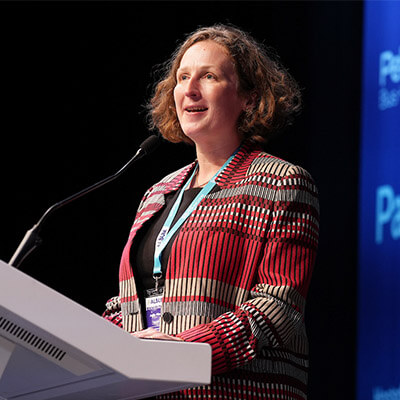
Julia Meek, Director of Bus – UK
Julia’s career has included a range of senior roles at mission-driven start-ups and scale-ups. Prior to joining Zenobē she was Head of Business Development for a UK social enterprise bus operator which included leading on public procurement bids, Chief of Staff at a microfinance organisation in China and co-founder of a social investment resource. She has an MBA from London Business School.
Thanks for getting in touch – we’ll respond as soon as possible. You can also reach us on contact@zenobe.com

Pete leads Zenobē’s growing team of Product specialists across all areas of the business. His team oversee our R&D as well as product development in both hardware and software.
He has been working in the European E-Mobility sector from over ten years, specialising in the design, build and delivery of software systems for EV Charging.