
A 300MW/600MWh battery storage project in Kilmarnock, supporting the uptake of renewable power.
Following the granting of planning permission by the Energy Consents Unit, construction of Kilmarnock South Battery Energy Storage System began in January 2024.
We expect the site will enter commercial operation late 2025/ early 2026.
battery to reduce wasted wind energy
tonnes of CO2 prevented over first 15 years of operation
of £750m portfolio to go into construction
The programme below highlights the main stages in the construction process starting with enabling works, through to the site becoming fully operational.
For any questions, please contact the Kilmarnock South project team.
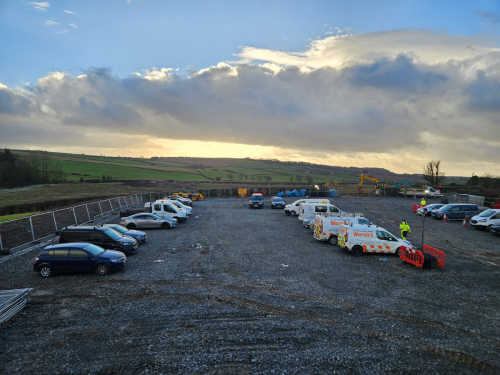
Temporary construction compound at Midton of Balgray
The enabling works were completed in December 2023. This work involved the construction of passing places on the C53 and built a new entrance into the site.
We also installed a temporary construction compound at Midton of Balgray and installed silt traps near Mugglesland Burn. Finally we also erected temporary security fencing and CCTV cameras around the perimeter of the site.
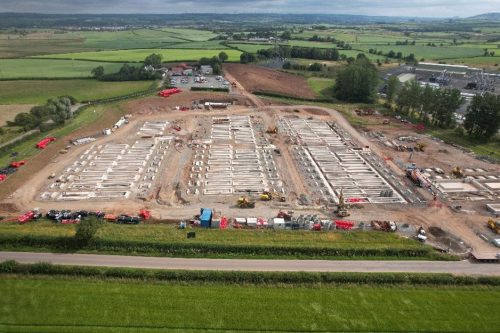
Aerial view of Kilmarnock South BESS
Earthworks activities included the clearing of vegetation and topsoil, excavation and reshaping of subsoil to create a gentle slope onto which aggregate is placed to create a level platform to support the batteries.
The earthworks was the most traffic-intensive phase of construction due to the volume of soil that had to be removed from site and the amount of aggregate that had to be brought in to the site to create the platform.
Surplus soil excavated from the site has been used to create a new habitat area in Midton.
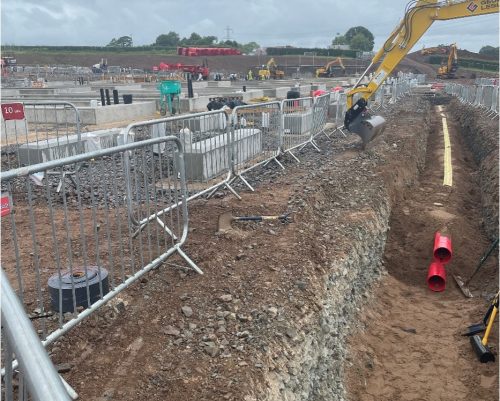
The civils phase comprised the installation of foundations, permanent drainage infrastructure, and cable trenches.
The components of the battery energy storage system were installed on concrete foundations. Some of the foundations were cast in-situ, which required ready-mixed concrete to be delivered to site using mixer vehicles.
Other foundations were pre-fabricated and were delivered to site via HGV and lifted into position with a crane.
During this phase, the permanent drainage system was installed across the site. This included the installation of trenches and pipes and the creation of an attenuation pond to collect surface water run-off.
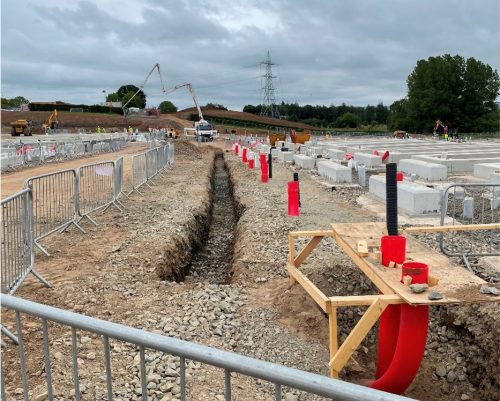
The cable which connects the battery site to the neighbouring substation was installed by a combination of horizontal directional drilling (HDD) and open-trench excavation.
The cable drilling and trenching works are now complete and there is now a duct connection between the Battery Storage compound and the adjacent substation.
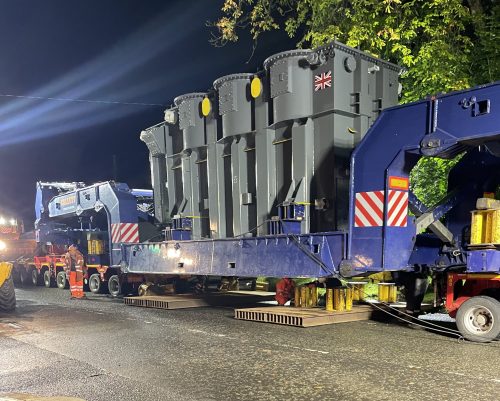
Delivery of HV transformer to site
While most plant and equipment were delivered to site using HGVs, the two high-voltage super grid transformers and the two medium-voltage switch rooms were classed as abnormal loads and were delivered to site using specialist delivery vehicles under police escort.
We worked with East Ayrshire Council and Ayrshire Roads Alliance to ensure the abnormal loads were delivered safely and with minimal disruption to other road users.
Delivery and installation of the battery units and other electrical equipment began in November 2024 and took approximately five months.
The batteries and other equipment were delivered to site using HGVs, craned into position, and installed on the foundations.
Permanent fencing was installed during this phase, and some of the landscape planting was undertaken at the same time.
Once the equipment was installed on-site, an extensive period of connecting the equipment and testing it followed to ensure compliance with all protocols and policies and to confirm that it operated as planned.
The commissioning phase took approximately eight months, commencing in February 2025.
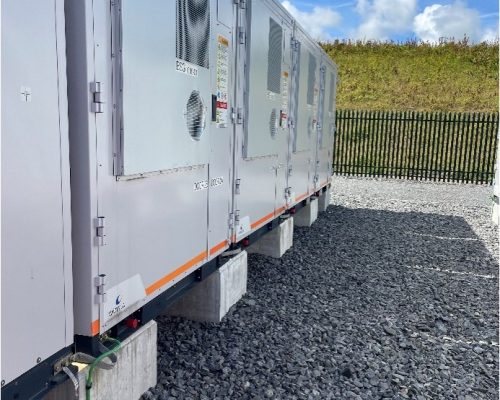
Zenobē’s BESS site in Blackhillock, Scotland nearing energisation
The Kilmarnock South BESS will deliver essential services to run the UK’s electricity network more efficiently for the next 40 years.
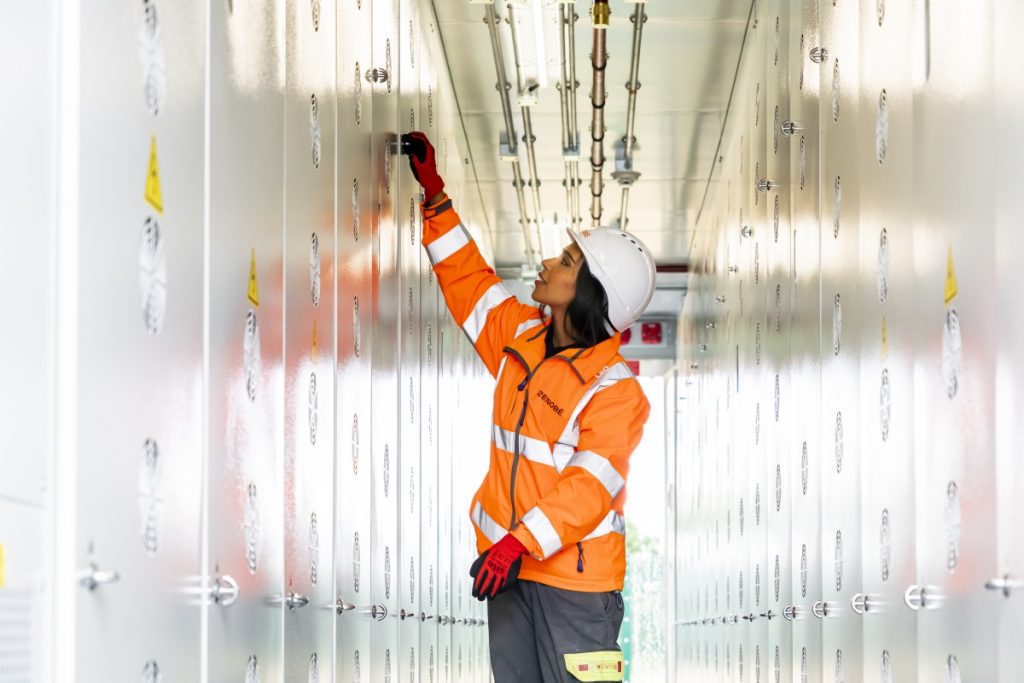
The operational maintenance requirements are very low so there will be minimal vehicle movements to and from the site once construction is complete and the site is fully operational.
Zenobē designs, builds and operates battery energy storage systems (BESS) that maximise the uptake of renewable power, ensuring it does not go to waste and can power our homes and our transport.
Founded in the UK in 2017, we will deliver 1.2GW worth of battery storage projects by 2026.
We’re investing £750m into the Scottish electricity transmission network over the next three years, to 2026. These sites will save more than 1 billion tonnes of CO2, over their 15 years of operation.
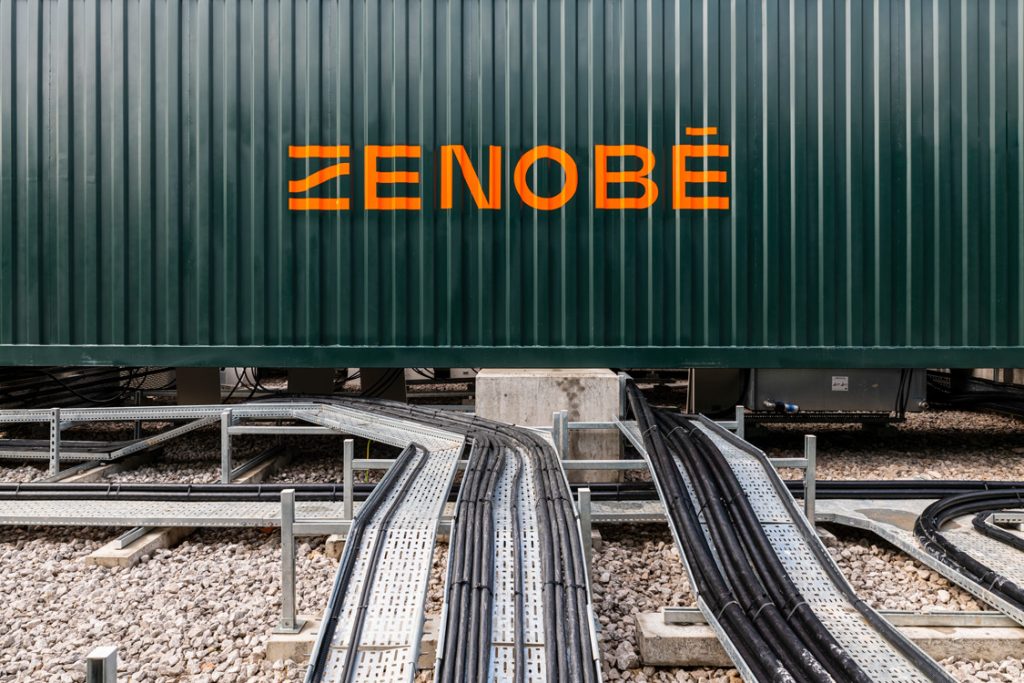
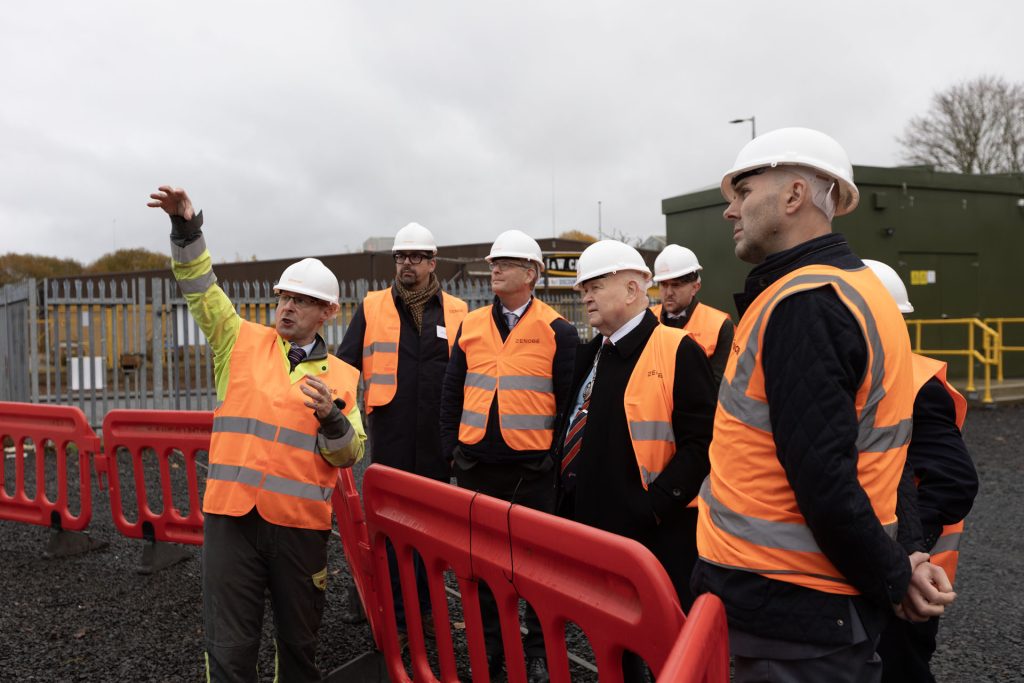
The Scottish and UK Governments have made a legal commitment to cut carbon emissions to net-zero. With the move away from fossil fuels, the demand for electricity will increase with the need to electrify transport, heating and more.
Battery storage plays a key role in helping the UK meet its net zero ambitions as it allows a greater amount of cheap renewable energy to be deployed whilst providing critical balancing and stability services without the need for traditional fossil power stations.
Renewable energy is intermittent, which means that at any time there is a risk of generating too much or too little in relation to demand from homes, businesses and even transport.
Batteries provide what energy insiders call ‘flexibility’ – they offer us the ability to adjust supply and demand to balance the system. For example, if wind turbines are generating more power than needed, batteries store this surplus energy. When wind generation is low but demand is high, battery operators release the stored electricity back into the system, ensuring this energy is not wasted.
They also provide a wide range of additional services needed to maintain grid stability and keep the lights on.
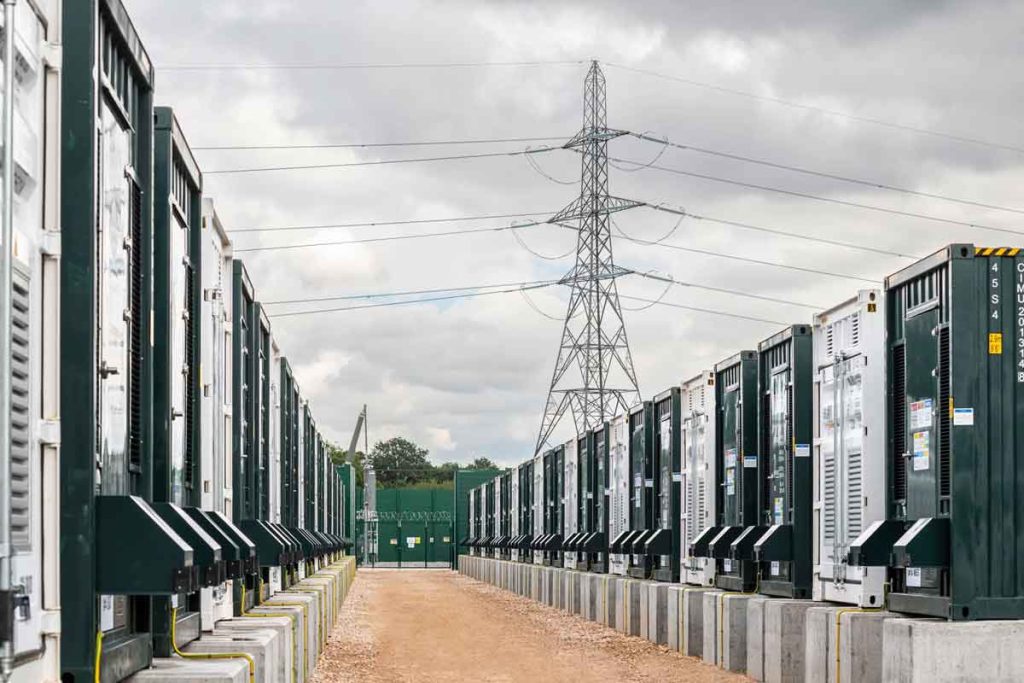
Kilmarnock South electricity substation is part of the 400kV electricity network responsible for transmitting renewable energy generated in Scotland to other parts of the UK where demand is greatest. The substation was identified by the National Grid Electricity System Operator as one of several strategic locations on the transmission network that required critical stability services.
Our battery storage solution will mimic the characteristics of a traditional power station to provide these critical services with a long-term contract with the Electricity System Operator from 2025 onwards.
Without storage schemes like Kilmarnock South, offshore and onshore wind and other renewable energy will be severely curtailed in the second half of this decade and fossil fuelled power stations will be called upon to deliver stability services.
Get in touch directly with our project team by emailing: ukprojects@zenobe.com
If you cannot find the document you are looking for, get in touch with our project development team by emailing ukprojects@zenobe.com

Pete leads Zenobē’s growing team of Product specialists across all areas of the business. His team oversee our R&D as well as product development in both hardware and software.
He has been working in the European E-Mobility sector from over ten years, specialising in the design, build and delivery of software systems for EV Charging.