
The Eccles Battery Energy Storage System (BESS) is a significant investment in Scotland’s electricity infrastructure, helping to maximise the use of renewable energy and support a more resilient electricity network.
Zenobē designs, finances, builds, owns and operates battery energy storage systems (BESS). We help grid operators overcome the challenges in balancing supply and demand and overcoming power stability and constraints as we transition away from fossil fuels towards net zero.
By 2027, Zenobē is on track to deliver 1.6GW of battery power, which will make us one of the largest owners and operators of battery storage in the UK.
battery to reduce wasted wind energy
site is expected to go into operation
of £750m portfolio to go into construction
Our site sits on 20 acres (8 hectares) of agricultural land located approximately 500m south of Eccles Substation in the administrative area of Scottish Borders Council.
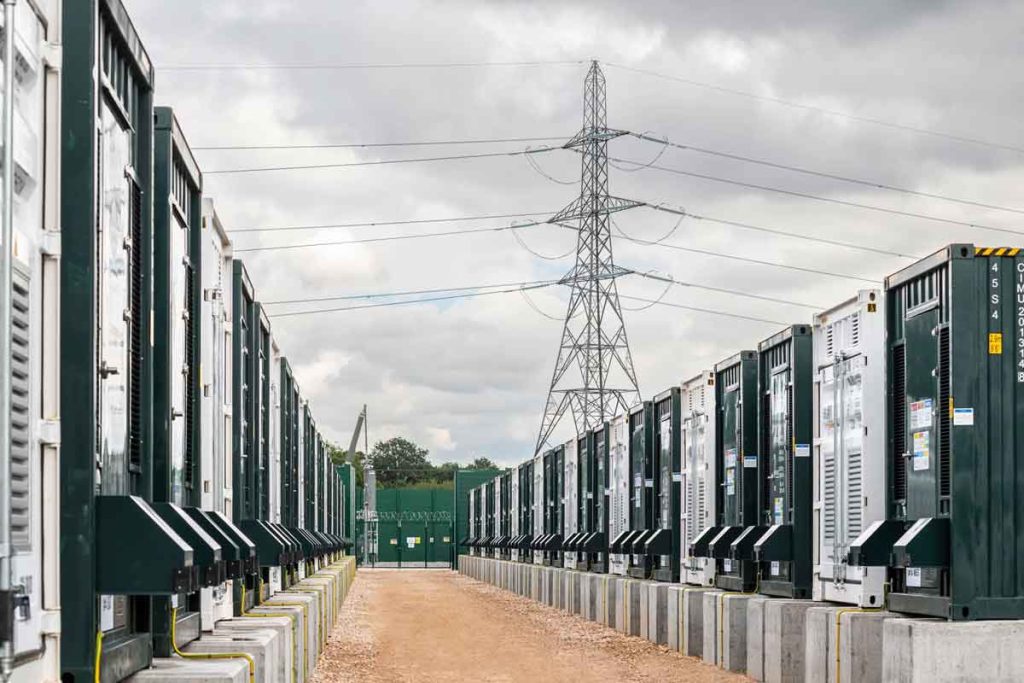
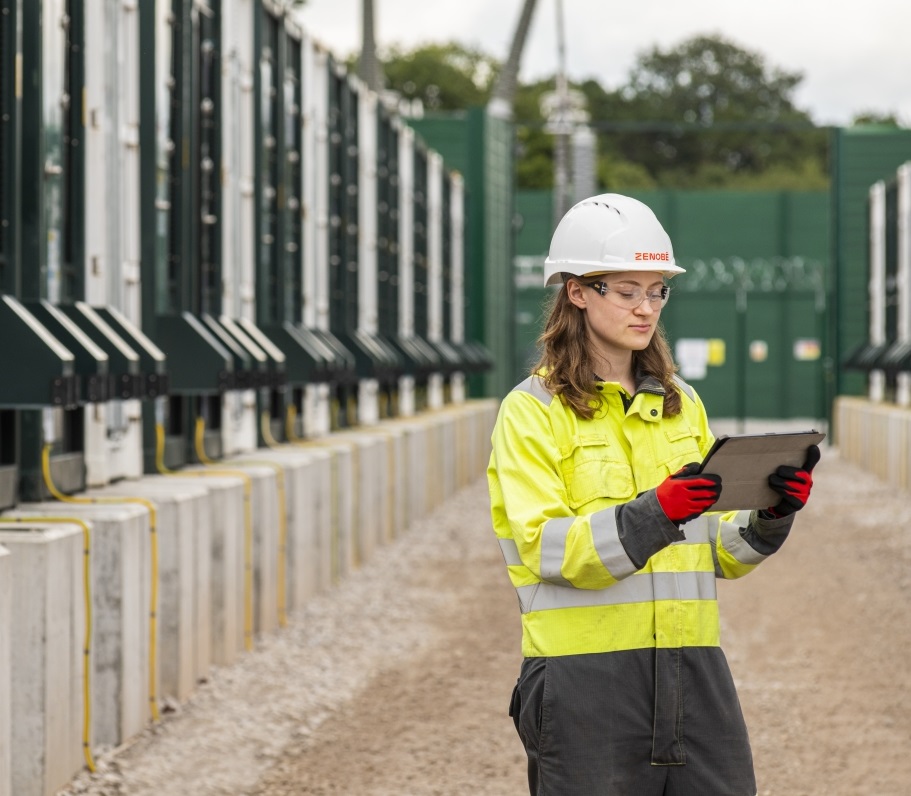
The development comprises the construction and operation of a battery storage scheme, with a total capacity of 400 MW. The principal components of the development include:
The sections below provide an overview of the Eccles Battery Energy Storage System from construction through to operation and eventual decommissioning.
Construction of the Eccles BESS is largely complete. Works have included the installation of battery energy storage units, transformers, cable infrastructure and associated electrical equipment, together with site access improvements, drainage systems, security infrastructure and landscaping works. The project has now moved beyond the most intensive phases of construction, with activity on site significantly reduced.
Throughout construction, Zenobē has maintained regular engagement with local stakeholders through public meetings, ongoing discussions with Leitholm, Eccles & Birgham Community Council, project newsletters and updates via the project website.
The project will progress through testing and commissioning activities to ensure all systems operate safely and effectively before entering service.
Once operational, Eccles BESS will provide essential services that support a more flexible, reliable and low-carbon electricity network. Operational maintenance requirements are low, resulting in minimal vehicle movements to and from the site.
At the end of the site’s operational life, equipment and infrastructure will be removed and the land restored in accordance with the relevant planning and environmental requirements.
Zenobē is committed to creating positive, long-term benefits for local communities. Working with Leitholm, Eccles & Birgham Community Council and other local stakeholders, we are developing a Community Benefit Fund designed to support local priorities and deliver lasting benefits for the area.
Further information will be shared as the fund progresses.
Zenobē designs, builds and operates battery energy storage systems (BESS) that maximise the uptake of renewable power, ensuring it does not go to waste and can power our homes and our transport.
Founded in the UK in 2017, we will deliver 1.6GW worth of battery storage projects by 2027.
The Scottish and UK Governments have made a legal commitment to cut carbon emissions to net-zero. With the move away from fossil fuels, the demand for electricity will increase with the need to electrify transport, heating and more.
Battery storage plays a key role in helping the UK meet its net zero ambitions as it allows a greater amount of cheap renewable energy to be deployed whilst providing critical balancing and stability services without the need for traditional fossil power stations.
Renewable energy is intermittent which means at any time there is a risk of it generating too much or too little in relation to demand from homes, businesses and transport.
Batteries provide ‘flexibility’ and the ability to balance the fluctuating supply and demand on the electricity system which comes with increased deployment of renewable and decentralised energy generation. For example, if wind turbines are generating more power than demand allows, batteries store this surplus energy. When wind generation is low but demand is high, battery operators release the stored electricity back into the system, ensuring this energy is not wasted.
Batteries also provide a wide range of additional services needed to maintain grid stability and keep the lights on. Our batteries have been the first in the world to provide fast reserve, to be used for reactive power and to manage grid constraints on the transmission network.
Our bespoke solutions range from ancillary, balancing and wholesale trading, to providing inertia, short circuit level, and voltage management.
Zenobē also provides non-wire alternative solutions that reduce or eliminate expensive network reinforcement costs. These are specific solutions that are essential to a decarbonised electricity system.
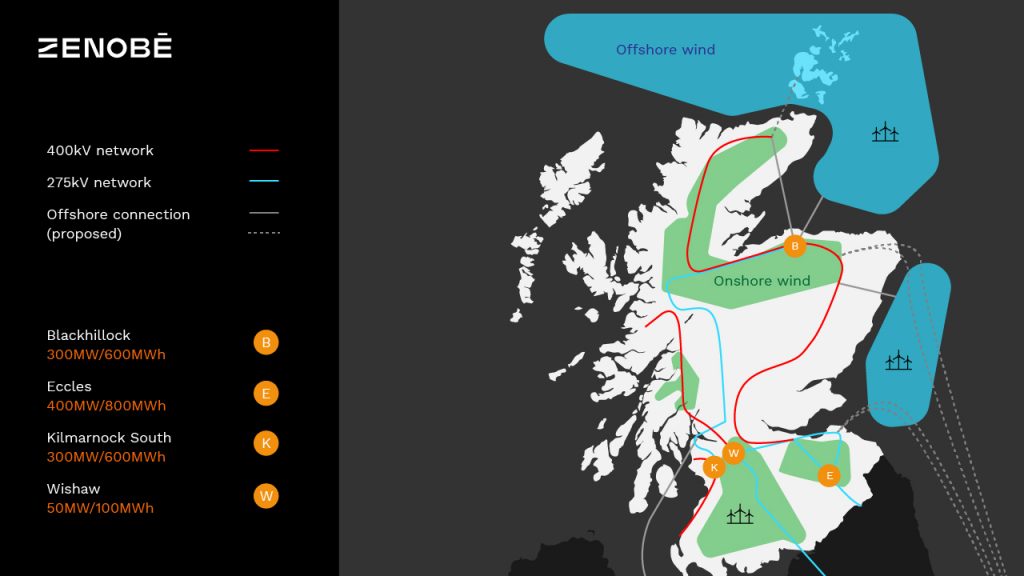
Eccles substation is part of the 400kV electricity network responsible for transmitting renewable energy generated in Scotland to other parts of the UK where demand is greatest. The substation was identified by the National Grid Electricity System Operator (NGESO) as one of several strategic locations on the transmission network that required critical stability services. Zenobē secured the long-term contract with NGESO to provide these critical services at Eccles.
Without storage schemes like our Eccles project, offshore and onshore wind and other renewable energy will be severely curtailed in the second half of this decade and fossil fuelled power stations will be called upon to deliver stability services. As such, battery schemes like Eccles are classified as Critical National Priority Infrastructure by the UK Government.
If you have any questions about our battery energy storage system in development in Eccles, Berwickshire contact our project management team via email Eccles project team: contact.eccles@zenobe.com
If you cannot find the document you are looking for, get in touch with our project development team by emailing ukprojects@zenobe.com

Pete leads Zenobē’s growing team of Product specialists across all areas of the business. His team oversee our R&D as well as product development in both hardware and software.
He has been working in the European E-Mobility sector from over ten years, specialising in the design, build and delivery of software systems for EV Charging.